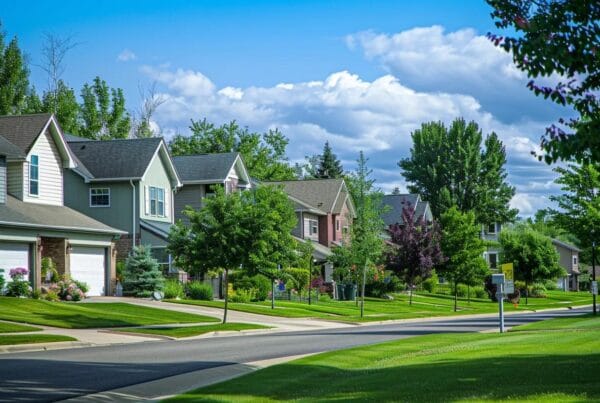
A private road can be part of the appeal of a Colorado property. It may lead to a mountain cabin, rural acreage, a small group of homes, or a residence set away from busy traffic. It can also create mortgage questions that do not arise when a home fronts a publicly maintained street.
Does the property have a legal right to use the road? Who pays for grading, snow removal, drainage, and repairs? Is there a recorded road-maintenance agreement? Can emergency vehicles reach the home? Will the lender accept an informal arrangement among neighbors?
These questions matter because a mortgage lender must evaluate more than the borrower’s credit and income. The property serves as collateral, and reliable legal and physical access can affect eligibility, value, marketability, insurance, and future ownership costs.
A home on a private road can often be financed. The outcome depends on the loan program, lender, title evidence, access rights, maintenance structure, appraisal, road condition, and specific property. Buyers who address these items early have more time to solve problems before closing.
This guide explains how private-road access can interact with a Colorado mortgage. It is general educational information, not legal advice or a guarantee that a specific property will qualify.
Key Takeaways
- A private road does not automatically make a Colorado home ineligible for financing.
- The lender may require proof of permanent legal access from the property to a public road.
- A recorded easement or right-of-way may be necessary, depending on the property and loan program.
- Maintenance responsibilities may need to be documented through an agreement, homeowners association, or another acceptable legal framework.
- Loan programs can treat private roads and shared driveways differently.
- The appraisal considers access, road characteristics, market reaction, and comparable properties.
- Snow removal, drainage, grading, gates, bridges, and emergency access can create practical and financial concerns.
- An informal handshake arrangement may not satisfy title or underwriting requirements.
- Buyers should involve the lender, title company, real estate agent, surveyor, and attorney early.
What Is a Private Road?
A private road is a roadway that is not maintained as part of the ordinary public road system. Ownership and responsibility vary. The road may be owned by one property owner, shared by several owners, controlled by a homeowners association, or located within an easement across another parcel.
Private roads can include:
- A gravel lane serving several rural homes
- A paved road inside a private community
- A mountain road maintained by nearby owners
- A shared driveway that crosses one property to reach another
- A gated access road
- A roadway managed by an association or road district
- A road crossing federal, state, municipal, or private land under a permit or easement
The appearance of the road does not establish its legal status. A paved road can be private, while an unpaved road can be public. The listing description, road sign, or seller’s statement is not enough to prove ownership, maintenance responsibility, or legal access.
Legal Access and Physical Access Are Different
A buyer may be able to drive to a home without having a legally documented right to do so. This distinction is critical.
Physical access means there is an actual route that reaches the property. Legal access means the property has an enforceable right to use that route. A visible driveway across a neighbor’s land may have been used for decades, but the title record must show whether that use is supported by a recorded easement, right-of-way, ownership interest, public dedication, court order, or another legal basis.
Lenders generally need confidence that the owner and future occupants can reach the property without relying solely on another person’s permission. A revocable or informal arrangement can create marketability and foreclosure risk.
The title company, surveyor, and attorney can help answer different parts of the question:
- The title search may identify recorded easements and exceptions.
- A survey or improvement location document may show where access lies in relation to parcel boundaries.
- An attorney can interpret the legal rights and obligations created by recorded documents.
- The lender decides whether the evidence satisfies the selected mortgage program.
Mortgage professionals do not create or interpret property rights for the buyer, but they need complete documents to evaluate loan eligibility.
Why Road Maintenance Matters to a Lender
A road can provide legal access while still creating uncertainty about upkeep. Colorado weather, elevation, steep grades, erosion, drainage, freeze-thaw cycles, and heavy snow can make maintenance essential.
If nobody is clearly responsible, the road could deteriorate or become impassable. Owners may disagree about costs, postpone repairs, or refuse to contribute. These issues can affect occupancy, emergency response, property value, insurance, and future resale.
A maintenance structure may address:
- Routine grading and resurfacing
- Snow and ice removal
- Dust control
- Drainage ditches and culverts
- Washout or erosion repairs
- Gate operation
- Bridge or retaining-wall maintenance
- Vegetation clearing
- Emergency work
- Contractor selection
- Cost allocation and collection
- Dispute resolution
The lender is not deciding which snowplow company the owners should hire. The lender is evaluating whether access and maintenance responsibilities are sufficiently reliable for the loan program and collateral.
What Is a Road-Maintenance Agreement?
A private road-maintenance agreement is a written document describing how owners or users will maintain a shared road and divide responsibility. An agreement may be recorded in county land records so it binds current and future owners, but buyers should verify its status with the title company or attorney.
A useful agreement may identify:
- The road and properties covered
- The legal access rights of each property
- The parties responsible for maintenance
- How routine and emergency costs are allocated
- How decisions are approved
- How money is collected
- What happens when an owner does not pay
- Standards for snow removal and ordinary upkeep
- Insurance and liability responsibilities
- Rights to enter the road area for work
- Procedures for adding users or changing terms
- Whether obligations transfer with each property
There is no single form that fits every road. A short agreement may work for two homes sharing a driveway, while a mountain community may need a more detailed structure, budget, reserve, and enforcement process.
Is a Maintenance Agreement Always Required?
Not necessarily. Requirements vary by mortgage program, lender, property, title structure, and governing law. Some programs or lenders may accept maintenance through a homeowners association or another documented framework. Certain agency guidance may recognize state law in situations where a separate joint maintenance agreement is absent. Other circumstances can still require a recorded agreement.
This is why generic online statements are risky. A buyer should not assume that every conventional loan requires the same document or that a VA, FHA, USDA, jumbo, or non-agency loan will apply identical standards.
The lender may ask:
- Is access permanent and legally enforceable?
- Does the right extend from the property to a public road?
- Is the easement recorded?
- Who owns the road?
- Who is responsible for maintenance?
- Is there an association or joint agreement?
- Does applicable law provide a usable maintenance framework?
- Are all necessary parties bound?
- Is the road physically adequate for normal access?
Provide documents early enough for underwriting and legal review. A title commitment that merely lists an easement may not contain the full instrument, so the lender may need the recorded document itself.
Conventional Loan Considerations
Conventional loans sold to Fannie Mae or Freddie Mac follow investor property standards, and individual lenders may add their own requirements. The appraisal report addresses site access and road characteristics. Comparable sales with similar private-road or easement features can help demonstrate market acceptance.
Underwriting may review:
- Recorded access rights
- Road ownership and maintenance
- Title exceptions
- Appraisal comments
- Shared driveway arrangements
- Association documents
- Evidence of marketability
The presence of a private road does not automatically require a larger down payment or create a higher rate. However, an unresolved access problem can make the property ineligible regardless of the borrower’s financial strength.
VA Loan Considerations

VA financing can be used for homes reached by private roads or shared driveways when applicable requirements are met. VA guidance has addressed recorded permanent easements or rights-of-way and maintenance arrangements. More recent policy also recognizes that state law may govern maintenance obligations in certain cases.
The lender still needs to document acceptable access for the property. A buyer should not assume that the absence of a signed road agreement is automatically acceptable or automatically disqualifying. The lender must review the recorded access, applicable state law, maintenance structure, title, and property facts under current VA guidance.
Because mountain and rural access issues can take time to document, veterans should share the listing address and title information with the loan team as soon as possible.
FHA Loan Considerations
FHA-insured mortgages require the property to satisfy applicable eligibility and appraisal standards. The home should have adequate vehicular or pedestrian access, and private streets generally require an acceptable legal right of use. The lender may need easement and maintenance documentation based on the situation.
An FHA appraisal is not a survey or legal opinion. The appraiser reports relevant site and access characteristics, while the title and underwriting process address recorded rights. If the road appears unsafe, inaccessible, or materially different from the local market, further review may be required.
Current FHA policy and lender requirements should be confirmed for the specific property instead of relying on an old checklist.
USDA Loan Considerations
USDA financing is frequently used in eligible rural areas where private roads are more common. The property must be accessible and meet current program standards, while the borrower and location must also qualify.
The lender may review permanent access, road condition, maintenance responsibility, title evidence, and the appraisal. A property being in a USDA-eligible area does not establish that its private access is acceptable. Conversely, a private road does not automatically make the property ineligible.
USDA handbooks and lender procedures can change, so the loan team should verify current requirements before the buyer commits to a document solution.
Jumbo and Non-Agency Loan Considerations
Jumbo, bank-statement, asset-depletion, DSCR, and other non-agency loans may use lender-specific property standards. One investor may accept a private-road arrangement that another will not. Documentation expectations can be more conservative when the property is unique, remote, difficult to access, or supported by limited comparable sales.
Changing loan programs late in the transaction can affect pricing, down payment, reserves, appraisal review, and closing timing. Buyers should ask the lender to review private access before assuming an alternative program will solve the issue.
How the Appraiser Evaluates a Private Road
The appraiser is not only looking at whether a car can reach the driveway. The appraisal may identify:
- Whether access is public or private
- Road surface, width, and apparent condition
- Topography and grade
- Whether access appears typical for the market
- Adverse conditions affecting utility or marketability
- Comparable sales with similar access
- Maintenance arrangements reported by available sources
- Gated access or seasonal limitations
- Other site characteristics relevant to value
A rough gravel road may be normal in one rural market and a significant negative factor in another. The appraiser analyzes market reaction rather than applying a universal dollar adjustment.
The appraisal does not guarantee that the easement is legally sufficient. Title and underwriting review remain necessary.
Colorado Snow Removal and Winter Access
Winter access deserves special attention. A road that is easy to tour in July may be difficult in January. Ask who plows, when service begins, where snow is stored, and how costs are divided.
Important questions include:
- Is the road maintained year-round?
- Does the agreement require snow removal?
- Is there a regular contractor?
- Who decides when plowing is needed?
- Are steep areas, switchbacks, or shaded sections treated?
- Can emergency vehicles reach the home?
- Are chains, four-wheel drive, or seasonal vehicles commonly needed?
- Does a gate interfere with plows or emergency access?
- Where can residents park during major storms?
Mortgage approval does not guarantee convenient winter access. Buyers should evaluate how the road fits their daily commute, medical needs, deliveries, school transportation, and insurance obligations.
Gates, Bridges, and Other Access Features
A private road may include more than pavement or gravel. Gates, cattle guards, bridges, culverts, retaining walls, tunnels, or steep switchbacks can create additional risk and expense.
For a gated road, confirm:
- The buyer receives an enforceable right to enter
- Keys, codes, remotes, or digital credentials transfer
- Emergency responders have an access method
- Maintenance and replacement costs are allocated
- The gate does not obstruct a recorded right-of-way
For a private bridge or major drainage structure, ask for inspection and repair history. A future replacement could cost much more than routine grading. Determine whether reserves or assessments exist and whether the structure is included in the maintenance agreement.
Shared Driveways Versus Private Roads
A shared driveway often serves two or a few properties, while a private road may serve a larger group. The label is less important than the legal and practical arrangement.
A shared driveway should be reviewed for:
- Recorded access rights
- Exact location and width
- Parking restrictions
- Snow storage
- Maintenance obligations
- Drainage
- Turnaround space
- Utility access
- Whether improvements cross parcel lines
An apparent shared driveway can involve an encroachment rather than an easement. A survey and title review can distinguish between them. If a garage, wall, fence, or parking area blocks the access area, corrective work or a legal agreement may be needed.
Title Review: Documents Buyers Should Request
Private-road issues often become visible in title documents. Buyers should review the title commitment and request copies of relevant recorded instruments.
Potential documents include:
- Access easement or right-of-way
- Road-maintenance agreement
- Declaration or homeowners association covenants
- Plat or survey
- Shared-driveway agreement
- Road association bylaws and budget
- Amendments affecting access
- Gate or utility easements
- Permits for access across government land
- Court orders or boundary agreements
The title policy may insure certain access rights while excluding others. Buyers should ask the title professional what is covered and consult an attorney for legal interpretation. A mortgage approval does not replace independent legal review.
Road Associations and Homeowners Associations
Some private roads are managed by an organized association. That can provide predictable maintenance, but buyers should evaluate the association’s financial and operational health.
Review:
- Current dues or road fees
- Reserve balance
- Recent and planned assessments
- Delinquent owners
- Maintenance contracts
- Meeting minutes
- Insurance coverage
- Pending disputes or litigation
- Major planned work
- Rules for voting and cost allocation
Road fees may be included in the borrower’s housing expense or other obligations, depending on the loan and documentation. Provide accurate amounts to the loan officer so the qualifying payment is calculated correctly.
What If There Is No Written Agreement?
The absence of a written maintenance agreement is not a problem to ignore until final underwriting. It should be investigated immediately.
Possible paths may include:
- Showing that an existing association governs maintenance
- Providing applicable recorded covenants
- Documenting a state-law framework acceptable to the loan program
- Creating and recording a new agreement with all required owners
- Selecting a loan program or lender that can accept the verified arrangement
- Resolving a title or access defect before closing
- Choosing not to purchase the property
Creating a new agreement can take time. All affected parties may need to cooperate, and an attorney should draft or review the document. The lender and title company should confirm acceptability before it is recorded.
Do not use a generic internet form without professional review. An agreement that omits a parcel, lacks signatures, conflicts with title, or fails to bind future owners may not solve the problem.
Can the Seller Fix an Access Problem Before Closing?
Some access problems can be resolved before closing through a recorded easement, amended agreement, corrective deed, boundary adjustment, or other legal instrument. The correct solution depends on the defect and the parties who hold the relevant rights.
The seller may need cooperation from neighbors, an association, a government agency, or another landowner. Surveying, legal drafting, signatures, notarization, recording, and title updates can take longer than ordinary repairs.
If the purchase contract requires a cure, the parties should clearly define:
- The defect being addressed
- The document or result required
- Who pays professional and recording costs
- The completion deadline
- The buyer’s review rights
- What happens if third-party cooperation is unavailable
- Whether the lender and title company must approve the result
A seller credit is not a substitute for permanent legal access if the lender requires the issue to be cured.
Insurance and Emergency Access
Homeowners insurance is usually required before mortgage closing. A private road may affect underwriting when access is steep, remote, seasonal, gated, poorly maintained, or difficult for emergency vehicles.
Insurers may ask about:
- Distance to a fire station or hydrant
- Fire-department access
- Road width and turnaround areas
- Gated entry
- Wildfire exposure
- Winter access
- Property occupancy and distance from services
An acceptable mortgage easement does not guarantee that every insurer will cover the home. Buyers should request an insurance quote early and disclose the access conditions accurately.
Budgeting for Private-Road Ownership
Road expenses can be irregular. A modest annual fee may cover routine grading and snow removal but not a washed-out culvert, retaining-wall failure, bridge repair, or full resurfacing.
Before buying, estimate:
- Regular dues or contributions
- Snow-removal costs
- Grading and gravel
- Drainage maintenance
- Gate service
- Reserve contributions
- Special assessments
- Personal vehicle wear
- Additional travel time
- Emergency repair exposure
Read the agreement to see whether costs are split equally, based on road length, usage, parcel count, frontage, or another method. If there is no reserve, owners may receive a large assessment with limited notice.
Questions to Ask the Seller

Buyers should request direct answers and supporting records:
- Is the road public or private?
- Who owns the land beneath it?
- What legal right provides access to the home?
- Is the easement recorded?
- Who maintains and plows the road?
- Is there a recorded maintenance agreement?
- Are any owners delinquent on road costs?
- Have disputes occurred?
- What were the last three years of expenses?
- Are repairs or assessments planned?
- Is the road passable year-round?
- Have washouts, closures, or access emergencies occurred?
- Who maintains gates, bridges, culverts, and drainage?
- Are commercial, rental, or construction vehicles restricted?
Seller information is helpful, but title, survey, association, and lender review should verify material facts.
A Private-Road Mortgage Checklist
Before making an offer
- Tell the loan officer the property appears to use private access.
- Ask for the road agreement, easement, plat, and association records.
- Review winter and emergency access.
- Obtain an early homeowners insurance quote.
- Allow enough contract time for title and document review.
After going under contract
- Order title work promptly.
- Request full copies of recorded documents.
- Have a qualified professional review legal access.
- Confirm maintenance responsibilities and current fees.
- Give the lender every relevant document.
- Ask whether a survey or additional appraisal review is needed.
Before closing
- Confirm all access conditions are cleared by underwriting.
- Verify that corrective documents were recorded.
- Review final title coverage and exceptions.
- Confirm keys, gate codes, and association contacts.
- Budget for routine and unexpected road costs.
Common Mistakes to Avoid
Assuming long-term use proves legal access
Years of driving across a road do not automatically establish a lender-acceptable recorded right.
Waiting for the appraisal to find the issue
The appraisal may identify private access, but title documents should be reviewed early.
Treating the seller’s description as proof
Statements such as “county maintained” or “everyone shares costs” should be verified.
Ignoring winter conditions
Tour the road carefully, ask about seasonal access, and understand snow-removal obligations.
Using an unsigned or incomplete agreement
The lender may require a binding recorded document covering the necessary properties and responsibilities.
Forgetting road fees during preapproval
Fees and assessments can affect the monthly budget and, in some cases, mortgage qualification.
Assuming another lender will accept the property
Program and lender rules vary, but a true title defect can affect multiple financing options.
Frequently Asked Questions
Can you get a mortgage on a Colorado home with a private road?
Yes, many such homes are financed. The lender must determine that access, title, appraisal, maintenance, and other property requirements are acceptable for the selected program.
Does a private road require a maintenance agreement?
Sometimes. The answer depends on the loan program, lender, recorded documents, association structure, governing law, and property facts. Confirm requirements with the lender.
Is a recorded easement required?
Permanent legal access is commonly important, and lenders may require a recorded easement or right-of-way from the property to a public road. The title company, attorney, and lender should review the specific documents.
Can an FHA loan finance a house on a private road?
Potentially, yes. The property must meet current FHA and lender requirements for access, appraisal, title, and maintenance documentation.
Can a VA loan finance a home with a shared driveway?
Potentially, yes. The lender will review recorded access and the applicable maintenance framework under current VA guidance.
Can USDA financing be used on a private road?
Potentially, yes. Private access is common in rural areas, but the property, road, title, appraisal, location, borrower, and maintenance arrangement must meet current requirements.
Does the county plow a private road?
Usually a private road is not maintained like an accepted public county road, but arrangements vary. Verify responsibility with the county, seller, and governing documents.
Who pays for repairs to a shared private road?
The agreement, association rules, ownership interests, or applicable law may determine cost allocation. Buyers should review the documents rather than assume an equal split.
Can a new road agreement be created during the purchase?
Possibly, if all required parties cooperate. Legal drafting, signatures, lender review, title review, and recording can take time.
Will a rough road lower the appraised value?
Not automatically. The appraiser considers condition, utility, market expectations, and comparable sales. A road that is typical locally may have a different market effect than unusual or unreliable access.
Does mortgage approval guarantee emergency access?
No. Buyers should independently evaluate fire, ambulance, snow, gate, and seasonal access with appropriate local professionals.
Start the Access Review Before It Becomes a Closing Problem
A private road can be a normal feature of Colorado living, but buyers should not wait until final underwriting to investigate it. Permanent legal access, clear maintenance responsibility, acceptable physical conditions, title evidence, insurance, and appraisal support may all matter.
Colorado Lending Team helps homebuyers compare loan options and identify property documentation that may affect financing. If a listing mentions a private road, shared driveway, access easement, road association, or seasonal maintenance, send the details to the mortgage team early. That allows more time to review possible requirements and coordinate with the other transaction professionals.
Explore Colorado home loan programs or request a personalized mortgage quote before submitting an offer.
Loan approval is subject to credit, income, assets, appraisal, property, title, insurance, and program requirements. Guidelines and availability can change. This article is for general education and is not a commitment to lend, legal advice, title advice, an appraisal, or a guarantee of approval.